
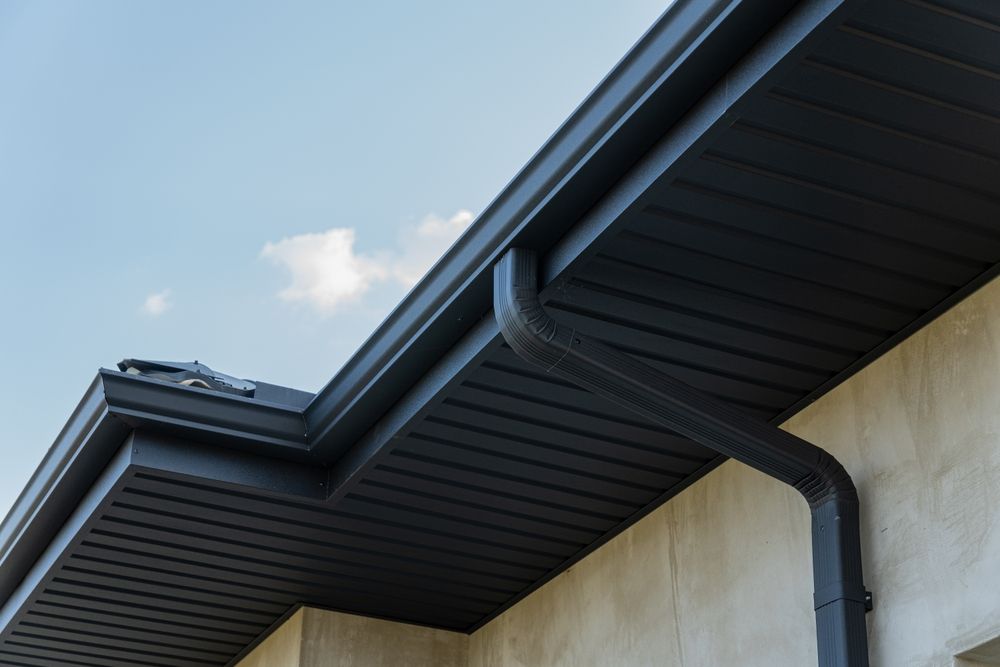
Water Directed Away from Foundations
Seamless Gutter Installation & Replacement in Katy for properties experiencing foundation settlement, fascia rot, or inadequate drainage control
Foundation problems throughout the greater Houston area often trace back to poor surface drainage, where missing or failing gutters allow roof runoff to saturate soil directly adjacent to foundation slabs and beams, creating the moisture fluctuations that cause concrete movement and structural cracking. Seamless gutters provide continuous water collection along roof edges without the leak-prone joints that characterize sectional systems, directing thousands of gallons away from foundations during Houston's intense rainfall events that can dump inches of rain in single storms. MTE Roofing fabricates and installs custom-fit gutter systems for residential and commercial properties where existing gutters sag, leak at seams, or no longer handle water volume effectively.
Installation involves measuring each roof section precisely and forming continuous gutter runs on-site using specialized equipment, eliminating the seam joints where sectional gutters eventually leak while creating properly sloped channels that move water to downspouts without overflow or standing water. The clay soils common in Katy expand when wet and contract during dry periods, so consistent foundation moisture control through effective gutter systems reduces the soil movement cycles that crack slabs and shift beams.
Schedule a gutter evaluation to determine whether your current system handles roof runoff effectively or requires replacement to protect foundation stability.
What Changes After Seamless Gutters Are Installed
Seamless gutter systems are formed from single continuous pieces of aluminum cut to exact length for each roof edge, with corners and end caps representing the only connection points compared to sectional systems that feature leak-prone joints every ten feet. Proper installation includes fascia-mounted brackets spaced to prevent sagging, correct pitch that moves water toward downspouts without creating standing pools, and downspout positioning that channels runoff away from foundation perimeters through extensions or splash blocks.
After installation, you'll notice that water flows cleanly from roof to ground-level discharge points without dripping behind gutters or overflowing during heavy rain, while soil saturation patterns near foundations become uniform rather than concentrated at uncontrolled runoff locations. Fascia boards remain dry between storms since water stays contained within the gutter channel rather than running down exterior walls, preventing the wood rot that develops when uncontrolled runoff saturates trim boards and roof edge components.
Seamless systems require less maintenance than sectional gutters because debris cannot accumulate at seam joints and fewer connection points mean fewer locations where leaves and twigs create blockages, though all gutter types benefit from periodic cleaning to maintain flow capacity. Both residential homes and commercial buildings gain improved drainage control and reduced long-term maintenance compared to aging sectional systems or properties lacking gutters entirely.
Questions Before Starting Your Project
Gutter installation decisions involve material choices, sizing considerations, and maintenance expectations that affect long-term performance.
What makes seamless gutters more effective than sectional systems?
Seamless gutters eliminate the joints where sectional pieces connect, removing the leak points that develop as joint sealants deteriorate and metal edges separate, while continuous runs maintain consistent structural strength without the weak points where sectional gutters eventually sag or pull away from fascia boards.
How are seamless gutters sized for Houston rainfall intensity?
Gutter width and downspout spacing must handle the roof area being drained and the intense rainfall rates common in Katy, where storms can produce two to three inches per hour, requiring five-inch or six-inch gutters on most residential roofs and sufficient downspout capacity to prevent overflow during peak rain events.
When should existing gutters be replaced rather than repaired?
Replacement becomes appropriate when gutters show multiple leak points, sag between hangers, pull away from fascia boards, or no longer handle water volume without overflow, since these conditions indicate structural failure or inadequate system capacity that repairs cannot fully address.
What gutter maintenance does the greater Houston area climate require?
Falling leaves during autumn and spring pollen create debris accumulation that blocks downspouts and reduces flow capacity, requiring annual or semi-annual cleaning to maintain drainage performance, while severe weather events warrant inspection to verify hangers remain secure and gutter slope hasn't changed from wind or debris impact.
How do gutters protect foundation systems from damage?
Controlled roof runoff discharge prevents soil saturation next to foundation slabs and beams, reducing the expansion-contraction cycles in clay soils that cause concrete cracking, settlement, and structural movement, while also preventing erosion channels and standing water near building perimeters that create additional foundation stress.
MTE Roofing fabricates seamless gutters on-site to exact measurements for your property, ensuring proper fit and drainage performance without the transportation limitations that affect pre-formed gutter products. Request an assessment to evaluate your current drainage system and determine appropriate gutter sizing for your roof configuration and local rainfall patterns.